Persephone Fact Sheet
Name: Persephone
Type: Icy
Size: 11480 km
Composition: Frozen water ice, unknown core composition
Mass: 4.7723 × 1024 kg (80% that of Earth)
Gravity: 0.8G
Orbit: Very large and eccentric elliptical orbit ~12,000 years to make one revolution around the Sun
Perihelion: 62 AU (9.3 billion km)
Aphelion: 880 AU (132 billion km)
Distance at launch: 82 AU (12.3 billion km)
Atmosphere: Mostly nitrogen, hydrogen and CO2, traces of oxygen
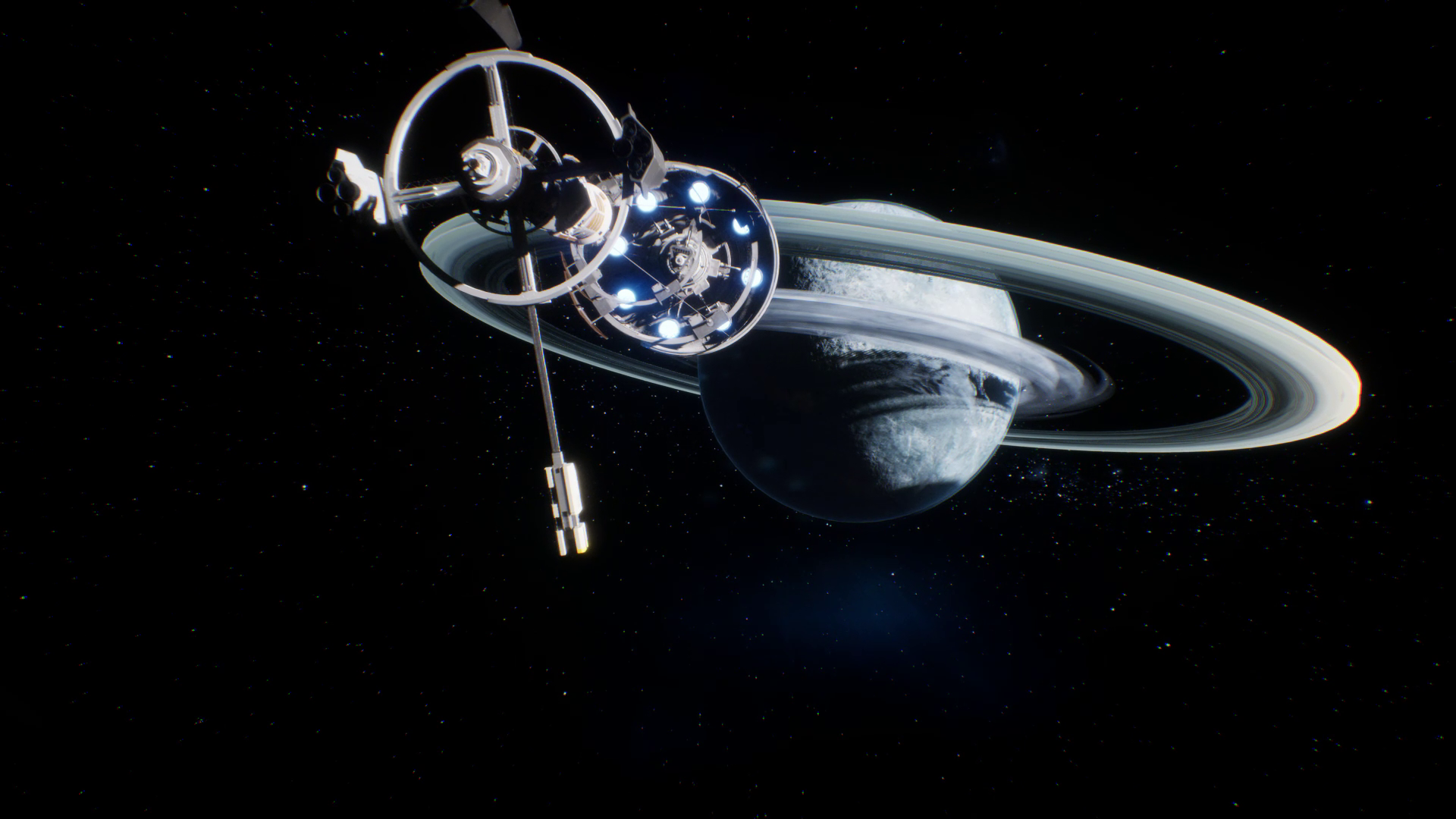
Rings: Double ring system, composed of ice particles and light elements
Surface temperature: min 130°K (-143°C), max 245°K (-28°C)
Day’s length: 16 hours
Persephone is the ninth planet in our solar system. Long hypothesized and looked for, it orbits at the edge of the solar system, far beyond the orbit of Neptune. Probably ejected from the inner solar system at its formation, it follows a 12,000-year elliptical orbit, approaching, in its perihelion, the orbits of Pluto, Sedna and the other dwarf planets whose trajectories it influences.
Planet Nine is named after Persephone, the goddess of the underworld and fertility, in reference to mankind’s hope of finding a fertile home in the darkness of the farthest reaches of the solar system.
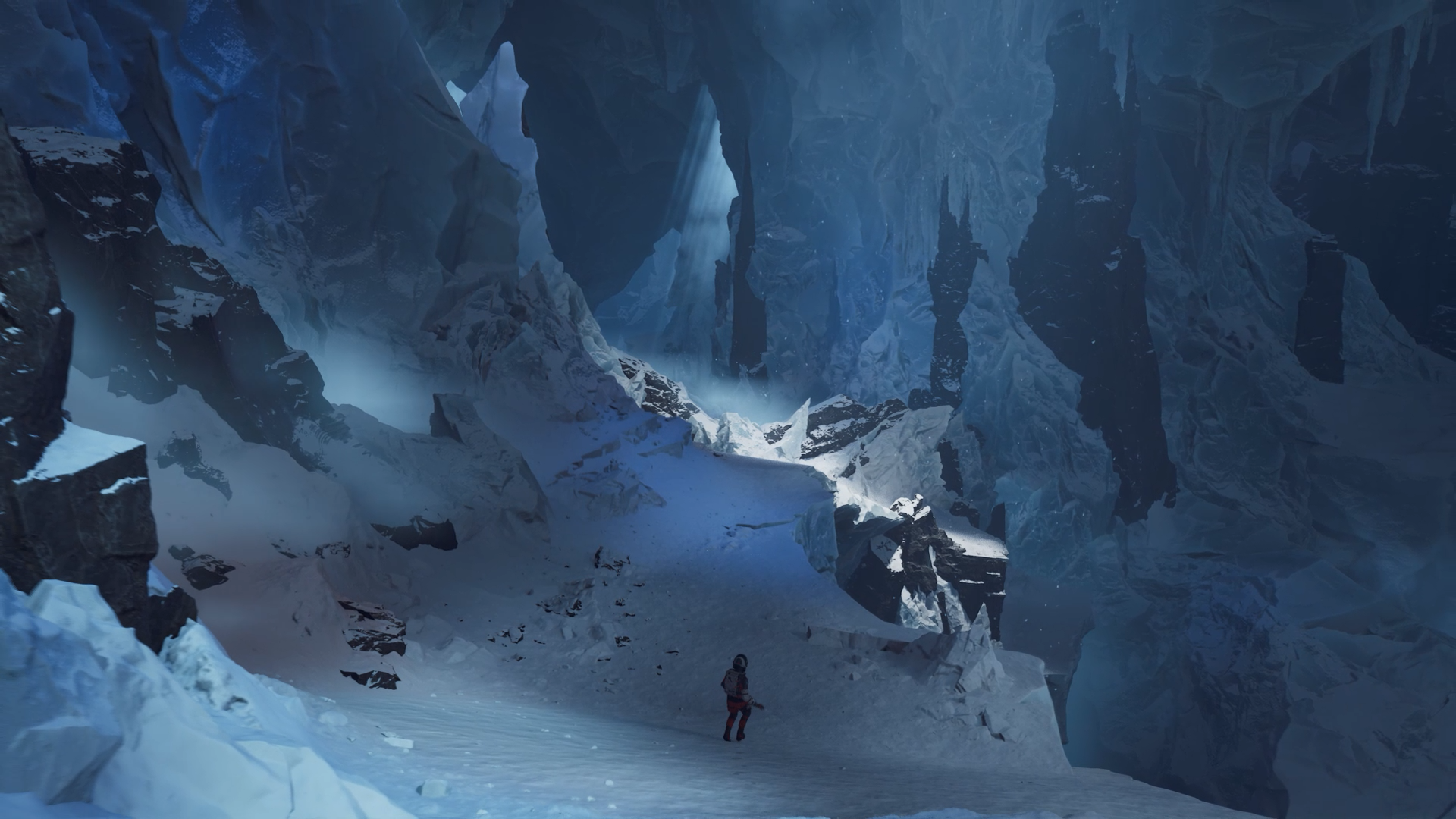
Persephone is a cold, hostile, frozen world. But it harbors an unexplained heat Source that allows liquid water to exist, and with it, the hope of a possible new habitat for mankind.
Mass
Persephone is an icy planet. It is a large planet, almost twice the size of Earth. Composed of water, ice, and scattered rock formations, its density is lower, resulting in a gravity of around 80% of that on Earth.
The planet has a double ring system made of ice and dust. The rings were formed at the same time as the planet and are made of the same matter: fragments that were unable to agglomerate due to the extreme cold on the outskirts of the solar system. However, the existence of these double rings holds a mystery that defies the known laws of physics. They are likely to be connected to the planet’s strong and organic magnetic field.
There are also large deposits of onyx rock found on the planet, whose formation seems exogenous to the planet. Perhaps the remains of a moon attracted by the planet’s gravitational pull, eventually crashing into the surface.
Atmosphere
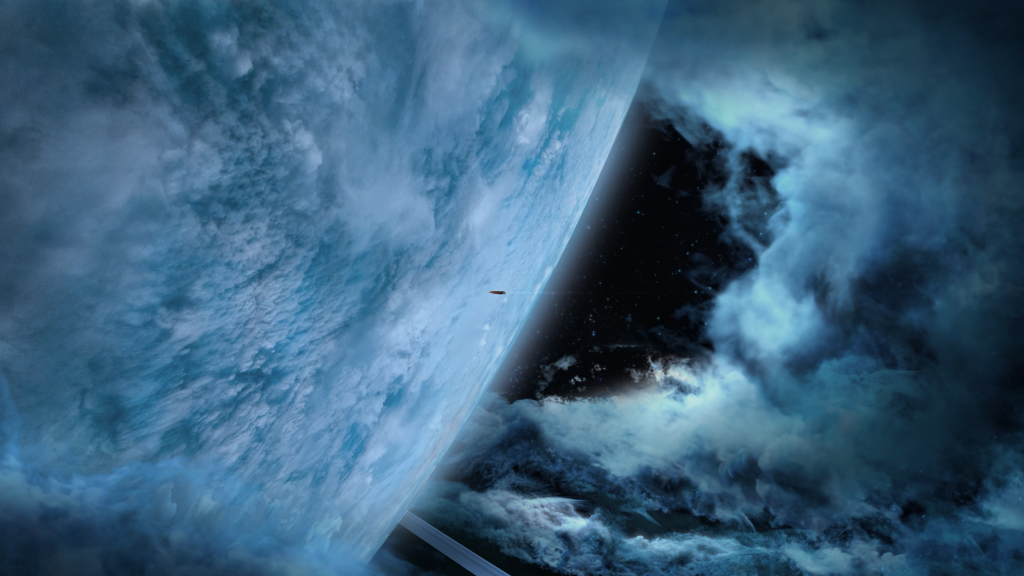
Persephone’s atmosphere is surprisingly dense and wide, the planet having a particularly strong gravitational pull and a relatively clear celestial neighborhood in the external system.
It has a very distinctive feature: an equatorial rift of high atmospheric pressure that clears the sky in this region and pushes condensation and water vapor to the outer regions of the planet. Perhaps an effect of the Source and the extreme warming of this ordinarily extremely cold planet.
This dense, water-vapor-rich atmosphere generates two high-pressure mega-storm systems in each hemisphere, making exploration conditions particularly perilous on the massive ice caps of both hemispheres.
Geology
Persephone features three main geological characteristics:
- The presence of an equatorial defrost zone that encircles the planet, with the ice cap melting at an impressive rate.
- Within this melting region, the presence of a heat Source seems to be the main cause of the existence of liquid water and the melting that is taking place on the planet. The origin of this Source is unknown and represents the focus of the Hope-01 exploration mission.
- Persephone’s magnetic field also has very strong distinctive properties: it is particularly powerful and seems organic in the sense that, unlike other planets in the solar system, it evolves periodically on a planetary scale. It appears to be made up of multi-magnetic hubs, potentially indicating interaction of the magnetic field with the planet’s presumed subsurface ocean.