Aphelion Dev Blog | Gameplay
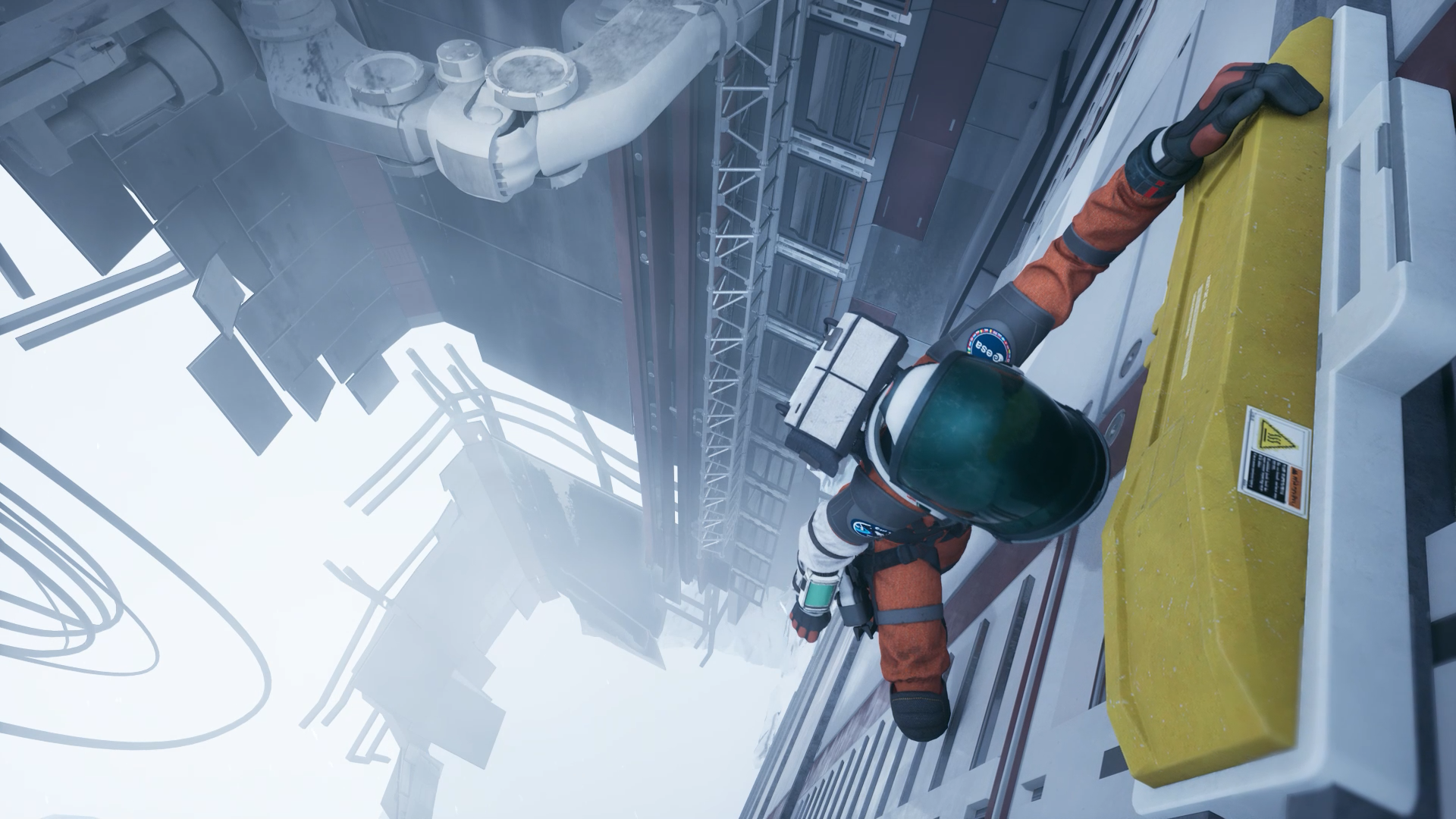
Hey everyone! Following our gameplay trailer, we want to talk a little more about the tension in the game and what you can expect from Ariane and Thomas’s gameplay.
CREATING TENSION THROUGH GAMEPLAY
We want Persephone to feel truly hostile and for players to feel that Ariane and Thomas could lose their lives at any moment on this dangerous and unknown planet. Game overs can happen abruptly whether you’re on a dangerous climb or trying to avoid the Nemesis.
There is no combat in Aphelion because we wanted the Nemesis to feel like a predator that cannot be killed or harmed but only avoided. Neither character can fight this totally unknown creature with any human-made weapon, and so a lot of the tension comes from knowing the danger it poses and accepting your vulnerability, which forces players to think ahead and analyze your environment. We did initially explore options to harm the Nemesis but eventually decided to focus more on stealth.
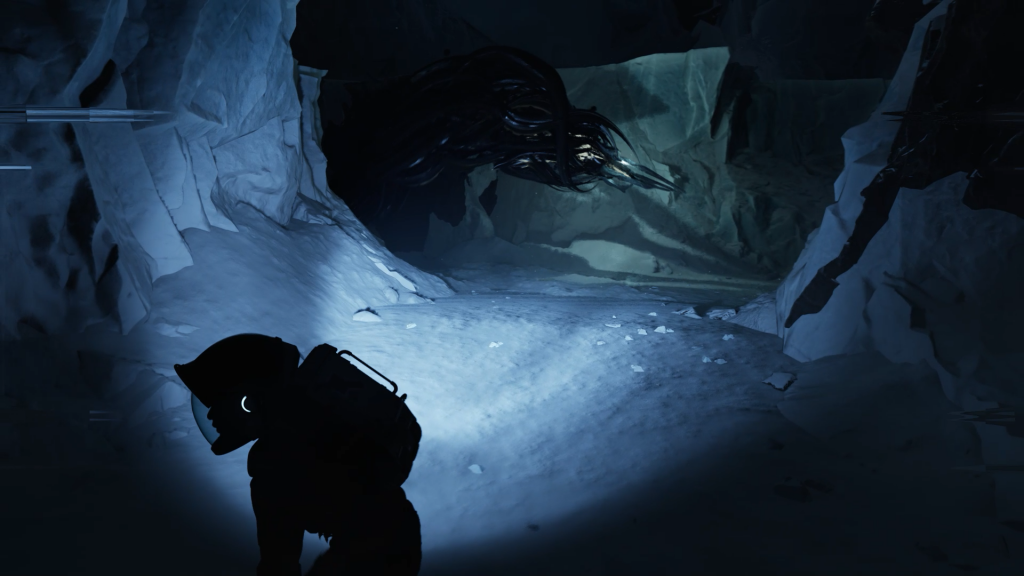
The designers did extensive work on the Nemesis’ behavior and sound perception; it reacts visually and through its cries to any sound that is generated by players’ movements. These stimuli also generate vibrations on controllers, so you constantly feel the danger and get feedback on the impact of your actions.
Ariane is never totally safe from the Nemesis within its presence. If it detects her but cannot physically reach her, it has a deadly ranged attack that will keep the pressure on until you can manage to put something between you and it.
The mechanics of the Nemesis are supported by the level design to keep that tension: through the pacing of dangerous traversal sequences, the construction of the Nemesis ‘arenas’, or even during more narrative-driven sequences. This is truer for Thomas, whose gameplay differs from Ariane’s, and where architecture and spatial layout play a crucial part in creating tension.
ARIANE & THOMAS
Ariane’s gameplay is quite physical and focuses on traversal and stealth. Thomas’ gameplay involves more investigation and discovery.
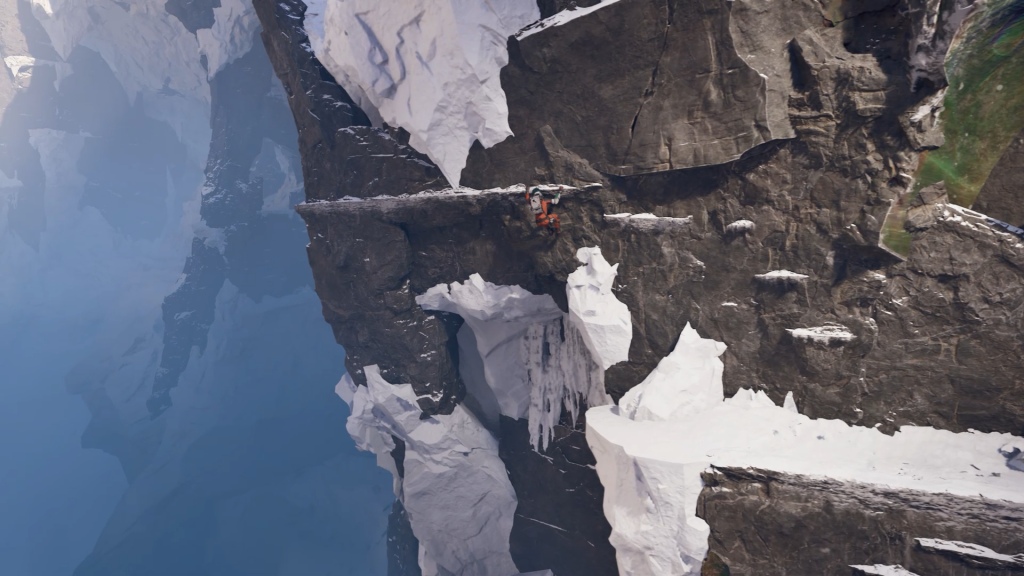
Ariane’s gameplay is a lot of traversal, so she had to feel agile yet human. She is not a superhero or a professional climber, so we needed her to feel like she’s struggling sometimes while remaining dynamic and smooth to play. Designers, programmers, and animators all worked closely together on achieving the best movement we could with the traversal. We’re not making a climbing sim game, so sometimes we take liberties and give her enough movement speed to be dynamic in several situations while still being realistic (which the mocap helped with too).
As Thomas was injured in the crash landing, he doesn’t have the same physical capabilities as Ariane does, and his tools and equipment were also damaged. While Ariane’s gameplay is physical and challenging, Thomas’ is more about exploration and interacting with the environment. He has an oxygen management mechanic too which requires him to find and connect to oxygen supply stations, which again introduces some tension.
Going from Ariane to Thomas offers some space to breathe as you’ll have time to explore, investigate, and uncover the unbelievable secrets and lore of Persephone.
Thanks for reading, and we’ll be back with another blog soon which focuses more on Persephone: how the environment affects gameplay, leylines, anomalies, and the EM scanner.